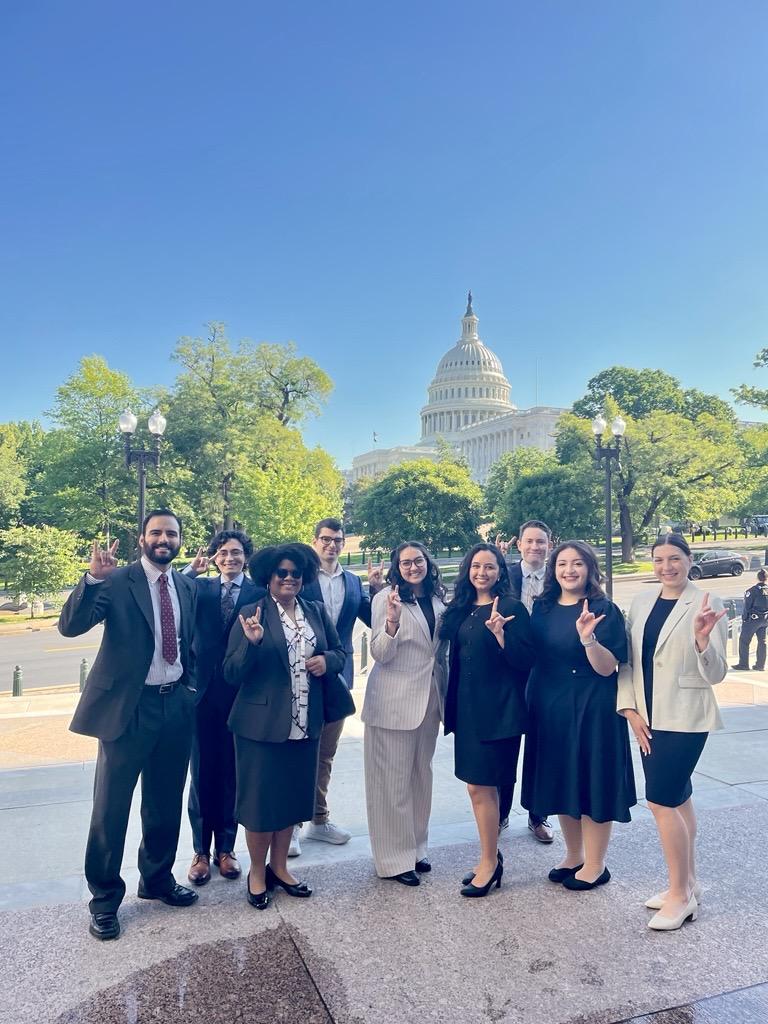
The Patman Center's Maymester in Washington D.C. gives graduate students a front-row seat to federal policymaking — and sends them home ready to lead.
The Patman Center for Civic and Political Engagement at the LBJ School of Public Affairs recently wrapped up its annual Maymester in Washington D.C., an immersive one-week course titled Effective Advocacy for Influencing Federal Policymaking, taught by Emily Bhandari, Executive Director of The Patman Center.
Open to all currently enrolled UT graduate students, the course is built on a simple but powerful premise: democracy functions best when policymakers receive information on the likely impacts of proposed policy. From May 11–15, 2026, a cohort of LBJ graduate students traded Austin for the nation's capital, spending five days learning directly from the people shaping federal policy — elected officials, legislative staff, interest group leaders, lobbyists, communication professionals, and think tank representatives from across the political spectrum.
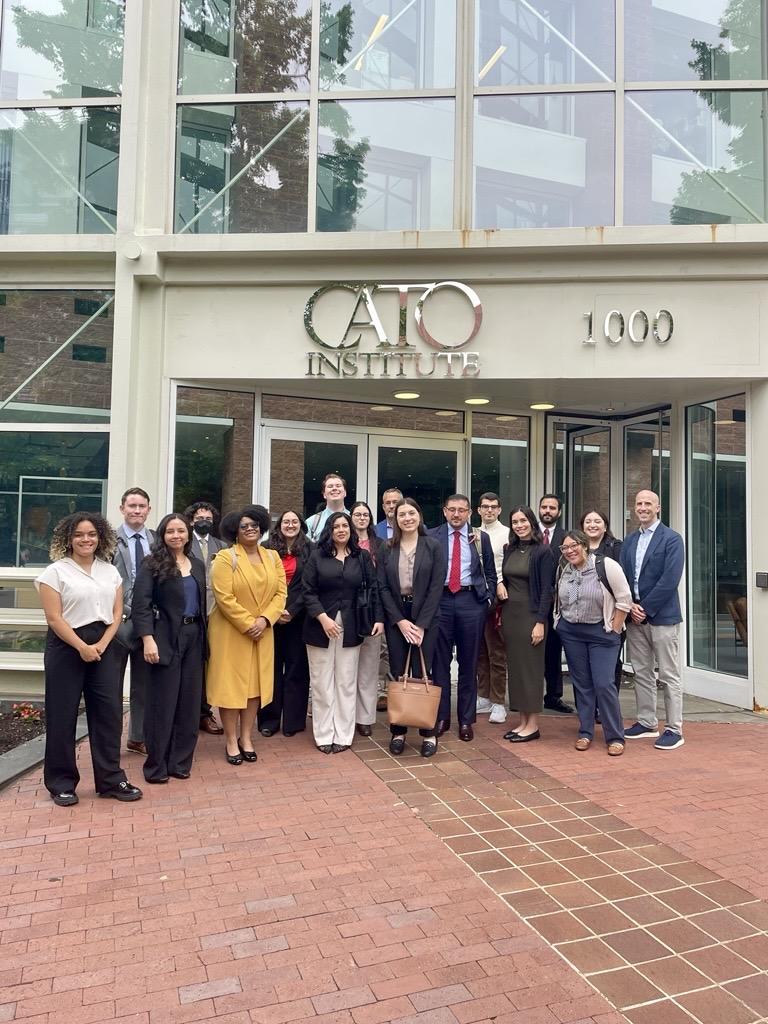
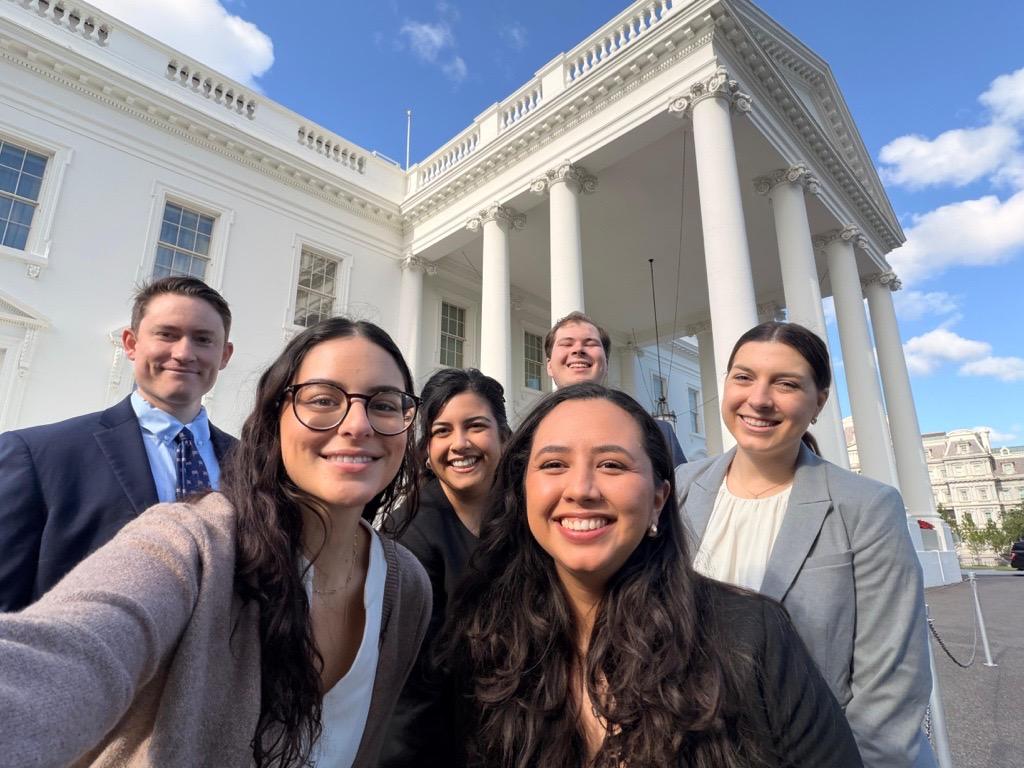
Students began the week at the LBJ Washington Center, where they received a foundational briefing on how Washington works from Bill Shute (former UT Federal Relations Director) before heading to the CATO Institute for a conversation on health policy and free enterprise. The cohort ended the day with a Patman Center sponsored welcome dinner to begin building relationships among the participants. Day two brought the cohort to Capitol Hill, where they heard from senior congressional staffers on effective federal advocacy strategies, followed by visits to Advancing American Freedom and the American Civil Liberties Union — two organizations that couldn't be more different in their missions, but both deeply committed to the values they champion. The week also included visits to the Brookings Institution, the Human Rights Campaign, and the Bipartisan Policy Center, as well as a conversation with Emmy Ruiz, former Senior Advisor to President Biden, and a session on disability rights with attorney and advocate Claudia Gordon. Students rounded out the week with a White House tour, visits to the Belmont-Paul Women's Equality National Monument and the National Archives, and a UT alumni networking reception at the historic National Union Building — all capped off with a Monuments at Night Tour sponsored by the Patman Center.
For many students, the week was as much about personal growth as it was about professional development. The experience of hearing directly from advocates, strategists, and policymakers across ideological lines challenged students to think more expansively about what effective advocacy looks like — and who gets to do it.
"With each day that goes by I feel my confidence as an advocate growing." — Catherine Rosas, MPAff, 2026
That growing confidence was a theme that ran throughout the week. Students who arrived uncertain about their place in the world of federal advocacy left with a clearer sense of direction, purpose, and the practical tools to get there.
"Prior to this week I didn't really have a good idea of what places to work at or how to get into policy advocacy. Now I feel like I have a more solidified plan for what kinds of organizations I want to work for in the future." — Kiere Caston, MGPS, 2027
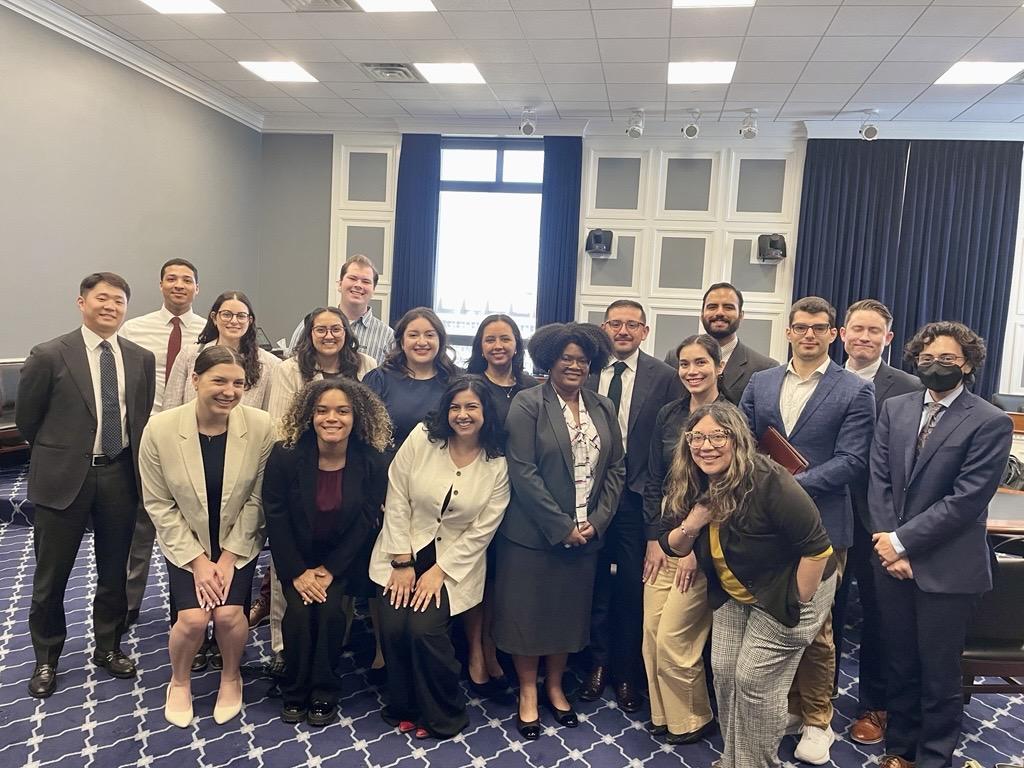
The course also pushed students to engage seriously with perspectives they might not naturally seek out — a skill that is increasingly essential in today's polarized political environment. By visiting organizations on both sides of the ideological spectrum and hearing from professionals with vastly different worldviews, students were challenged to find common ground and develop the kind of empathy that makes for effective advocacy.
"Although I did not always enjoy the viewpoints of the speakers, it was a good reminder that everyone with whom I fundamentally disagree is also human." — Nicholas Marshall, MGPS and Asian Studies, 2027
Beyond broadening their worldview, students left Washington with a concrete set of advocacy skills — from developing an advocacy plan and framing an issue for stakeholders, to leading education awareness campaigns, motivating decision-makers, and identifying both allies and threats to success. For students pursuing careers in public service, these are not abstract concepts — they are the everyday tools of the trade.
"What I learned this week will not only make me a better advocate: it will make me a better public servant in service to the communities I care about." — Rebecca Conejo, MPAff, 2026
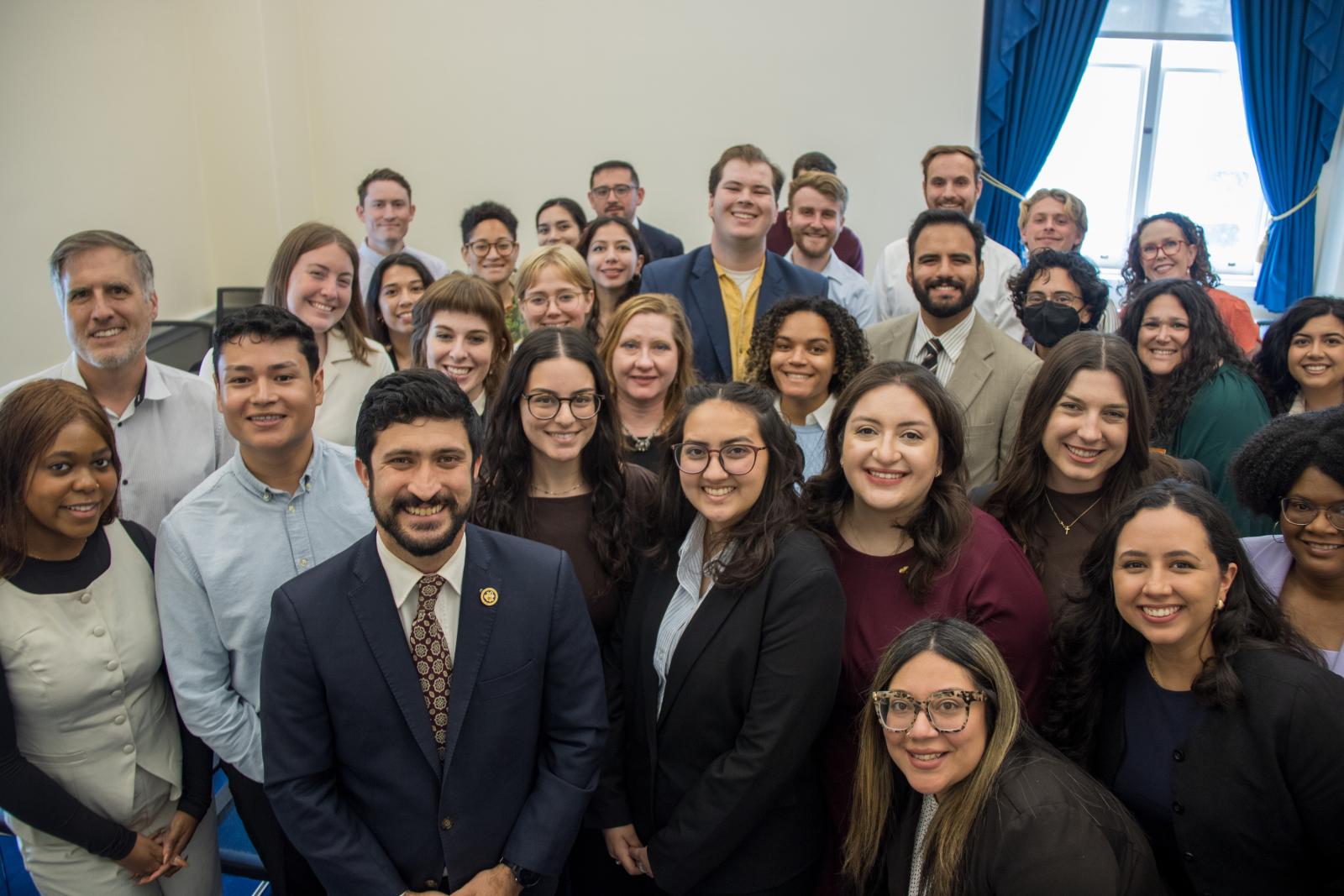
And for many, the excitement of putting those tools to use is already building.
"I am so excited to use all the advocacy tools and steps I learned this week to contribute to bettering America." — Kara Marcantel, MD/MPAff, 2027
Together, these reflections capture what makes the Maymester in Washington D.C. such a distinctive and transformative experience. In just five days, students gain not only a deeper understanding of how federal policy is made — but a genuine belief in their own capacity to influence it.
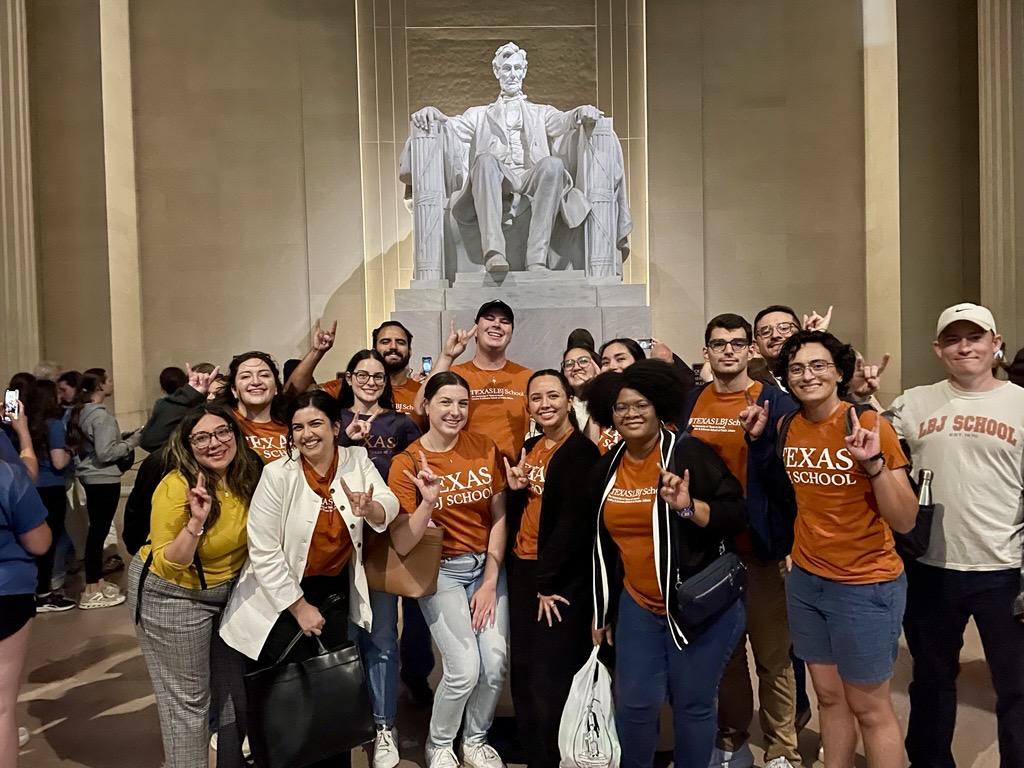
The Maymester in Washington D.C. is offered annually through The Patman Center for Civic and Political Engagement at the LBJ School of Public Affairs. Scholarship opportunities are available. Learn more.