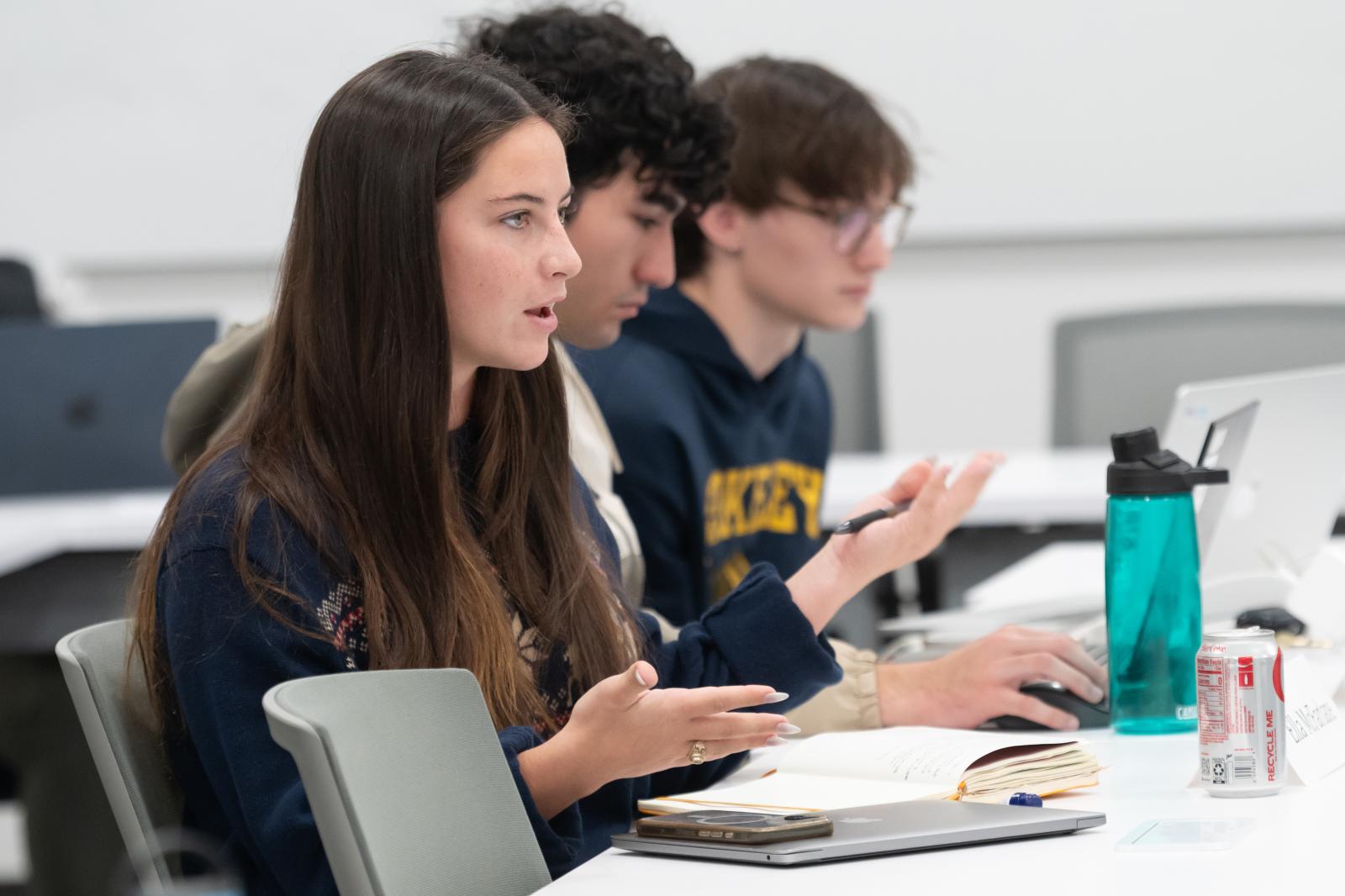
The Patman Center for Civic and Political Engagement at the LBJ School of Public Affairs continues to prepare students for impactful roles in public service through its course, Skills for Civic Leadership, taught by Emily Bhandari, Executive Director of The Patman Center.
Designed to equip students with the tools needed to lead as engaged citizens, organizational leaders, and future public officials, the course emphasizes both practical skill-building and personal development. Through direct engagement with practitioners, interactive workshops, and structured reflection, students leave the course with not only a stronger understanding of public leadership—but also the confidence to actively step into it.
For many students, one of the most transformative takeaways was realizing that civic leadership is not reserved for experts or insiders, but is accessible to anyone willing to engage and take initiative. This shift in mindset is critical for students entering careers in public service, where confidence and willingness to act often matter just as much as technical knowledge.
“When I first came to LBJ, I was intimidated because I did not know much about politics, but now I know anyone who cares about improving their community can take steps to make a difference.”
— Melanie Garcia, Undergraduate, Public Affairs
Students also highlighted how the course translates theory into practice by exposing them to real-world leadership scenarios. By hearing directly from professionals and applying those lessons through exercises and reflections, students develop essential skills in communication, persuasion, and strategic thinking—tools that are directly transferable to careers in government, advocacy, consulting, and beyond.
“This course has provided me with real-world examples of civic leadership through guest speakers, different workshops, and the opportunity for various reflections on the content that we have been learning. My primary takeaway from this course is that effective civic leadership requires strong communication skills… as well as the ability to mobilize others toward a common goal.”
— Austin Macikanycz, Undergraduate, Public Affairs
The course also does not shy away from the emotional and ethical weight of leadership, particularly in moments of crisis. By engaging with real-world case studies and leaders who have navigated high-stakes challenges, students begin to understand that leadership is not only about strategy—but about resilience, responsibility, and persistence under pressure.
“I realized in that session that leadership after tragedy is not mainly about saying the right thing. It is about staying present and staying persistent when the political process becomes exhausting and slow.”
— Renate Jochim, Undergraduate, Government
Another core focus of the course is teaching students how to work effectively across differences—an essential skill in today’s political and professional environments. Through discussions, group work, and exposure to diverse perspectives, students learn how to build coalitions, navigate disagreement, and collaborate toward shared goals.
“Successful advocacy often depends on building coalitions across ideological differences… civic leadership involves the ability to listen, collaborate, and recognize the motivations that drive individuals on all sides of an issue.”
— Madison Romero, Undergraduate, Public Affairs
Importantly, the course expands students’ understanding of what leadership looks like, challenging the idea that it must always be visible, charismatic, or front-facing. Students come to recognize that leadership can also take place behind the scenes—through organization, strategy, and sustained effort—which opens the door for a wider range of students to see themselves as leaders.
“Watching different speakers this semester has made me notice how many forms civic leadership can take. Some styles are mobilizing and high intensity. Others are quieter and more procedural, focused on making work effective inside institutions.”
— Renate Jochim, Undergraduate, Government
Finally, students emphasized the importance of one of the most practical and transferable skills developed in the course: the ability to work with people who hold different viewpoints. Whether in politics, business, or nonprofit work, this ability to collaborate across disagreement is essential for achieving meaningful outcomes.
“Learning how to work with a side you don’t agree with is a skill that will serve any professional, no matter their job.”
— Georgia Heery, Graduate, Global Policy Studies
Together, these reflections highlight what makes Skills for Civic Leadership such a distinctive and impactful course. By combining hands-on experience with personal reflection, the course not only teaches students how to lead—it shows them that they already have the capacity to do so.
Register for the next class in Spring 2027!