Join us for a panel discussion led by LBJ experts on what is driving food insecurity in the world today and the solutions that we can put in place both in our local and global communities. We are hosting this event in celebration of Texas International Education Week!
International inspired light bites provided!
Free and open to the public.
LBJ South Lobby
Panelists:
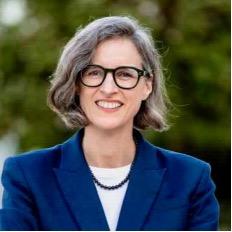
Dr. Erin Lentz
Erin Lentz is an associate professor at the LBJ School of Public Affairs at The University of Texas at Austin. She teaches on research and empirical methods, development policy, gender and development, and food policy. Her research explores food security; early warning systems; gender, nutrition, and agriculture linkages; and U.S. food aid and food assistance policies.
Dr. Lentz is currently pursuing four research agendas. First, she is an established authority on U.S. food aid and food assistance policy. For nearly two decades, she has studied donor responses to food insecurity in low-income countries. This research informed her 2018 congressional testimony on reforming food aid. Second, she researches innovative approaches to improving early warning for food insecurity crises, with a focus on leveraging real-time data and machine learning techniques. Third, she analyzes the links between hunger, gender and nutrition. With collaborators she developed the Women's Empowerment in Nutrition Index. Having validated the Index in South Asia, she is now preparing to validate it in Kenya. Fourth, she is developing a collaborative, community-based research project exploring the social life of famine through collecting oral histories of survivors of the 1974-5 famine in rural, northern Bangladesh.
Dr. Lentz received a Fulbright fellowship to Bangladesh to research the secondary effects of food aid in local communities. She has worked or consulted with CARE, the United Nations World Food Programme and numerous other international NGOs. She holds a Ph.D. in sociology and M.S. in applied economics and management from Cornell University.

Dr. Catherine (Kate) Weaver
Catherine (Kate) Weaver is Associate Professor at the LBJ School of Public Affairs and Co-Director of Innovations for Peace and Development at The University of Texas at Ausin. She is a distinguished scholar and founder of the Next Generation Scholars Program at the Strauss Center for International Security & Law. She previously served as LBJ's associate dean for students, associate dean for academics, and graduate advisor for the Ph.D. and MGPS programs.
Dr. Weaver researches transparency in international development aid, reforming global economic governance, and the politics of data. She has developed methods to track and dynamically geomap aid and climate adaptation, and is currently completing two book projects on Policy Hype Cycles: Global Development and the Transparency Revolution and Representation in Global Governance.
Dr. Weaver co-directs (with Drs. Daniel Nielson) Innovations for Peace and Development, an interdisciplinary research lab devoted to alleviating global poverty and peacebuilding. She currently serves on the Board of Advocates for the Baylor Collaborative on Hunger and Poverty, and previously served on the Board of Directors of Bread for the World. In 2022-23, Dr. Weaver was the Fulbright Canada Research Chair in Global Economic Governance, University of Waterloo and a Visiting Research Fellow, Watson Institute of International and Public Affairs, Brown University.
Dr. Weaver is author of the award-winning Hypocrisy Trap: The World Bank and the Poverty of Reform (Princeton University Press), and numerous articles and book chapters in outlets such as American Political Science Review, International Organization, Review of International Political Economy, Review of International Organizations, Journal of Experimental Political Science, Ethics and International Affairs, Global Governance, Cambridge University Press, and Oxford University Press. She is co-editor of Handbook of Global Economic Governance (with Manuela Moschella, Routledge) and International Political Economy and the Transatlantic Divide (with Nicola Phillips, Routledge).
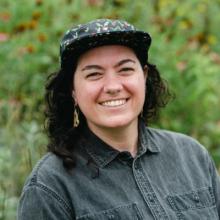
Carolina Mueller
Associate Director, National Young Farmers Coalition; Former President of Central Texas Young Farmers Coalition; President of the Board of Directors, Texas Organization of Farmers and Gardeners Association.
Carolina is a tenacious cook, gardener, weekend rancher, and food systems practitioner. From working in food service, to nonprofits and farms for over a decade, she is passionate about bridging big-picture policy and people’s lived experiences. Caro recently earned her Master’s of Public Affairs with a focus in agriculture and food systems with an eye towards program evaluation. Over the past decade, Carolina has worked in a number of positions all along the food chain. Her work in food spans from the big-picture national policies down to the personal experiences of individuals and communities. Carolina is excited to serve on the board of TOFGA to support producers all over Texas.

Hellen Chabunya
Hellen Chabunya is a PhD student in Public Policy at the LBJ School of Public Affairs. Her research looks at how subnational political competition shapes representation and policy priorities in low-income democracies, and she is particularly concerned with closing Malawi's gender representation gap. As a Graduate Fellow at the Center, she is working with Professor Michael Wahman on a project on gender quota systems and what they could offer Malawi. The project begins by mapping quota designs in electoral codes and constitutions around the world, laying the groundwork for experimental research on how different quota designs affect political behaviour and perceptions of legitimacy, both in Parliament and in local councils.
Hellen brings fourteen years of experience in Malawian politics and international diplomacy to her research. She has served as Advisor to the Vice President of Malawi and as Head of Political and Public Affairs at the British High Commission. She is a founding member of the United Transformation Movement, a Malawian political party, and the founder of Chuma Agricultural Enterprise. She holds a BA in Social Work from the Catholic University of Malawi, a Master of Public Policy from the Blavatnik School of Government at the University of Oxford and a Master in Public Administration from Harvard Kennedy School.
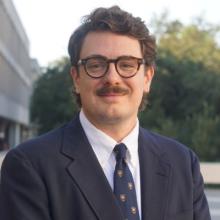
Dylan Driscoll